
Places to visit by Antonio Muraro


1. The Lower Castle
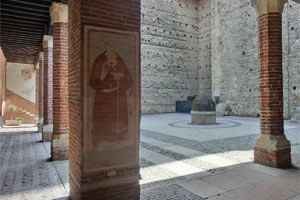
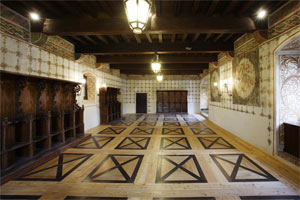
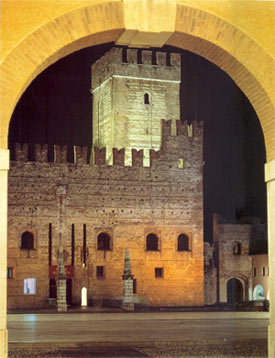 Marostica became "Scaligera" (The Della Scala family from Verona were called the “Scaligeri”) following the conquest of Vicenza by Cangrande della Scala in 1311, and the family remained in control throughout the fourteenth century until 1387. Marostica, a border outpost of the Della Scala, was involved in the war between Padua and Verona in the 1312-1314. During this period Marostica, which rose and grew around St. Mary’s Church situated to the east of the present-day walled town, was attacked and sacked by the Padovani, but the fortress on the Pauso held out. In 1338 Marostica fell under the dominion of Sicco da Caldonazzo, but only for a few months before returning into the safe hands of the Della Scala, who decided that the town’s fortifications required attention. During the Fourteenth century they built the Upper Castle on the Pausolino and the Lower Castle, joining them with a curtain wall studded with walkways and battlements. The Lower Castle is a large crenulated quadrangular structure with a donjon (keep), built with local sandstone and limestone. Very few fired bricks were used as they were extremely expensive in those days. There were two drawbridges over the moat, one in the north and one in the south of the building. Above the south entrance there was a battlement which has been reconstructed in recent years and the inside bailey (courtyard) is surrounded with two loggias (galleries) supported by strong brick columns. The Lower Castle gradually changed from being a military fortress to being a place of government and when Marostica passed under the rule of the Republic of Venice in 1404, it became the Governor’s (or Podestà) residence: here he managed the civil justice and supervised the good governance of the community. The “Consiglio dei Trenta” (the Council of Thirty) was held in the “Sala Consiliare” (Council Hall). The castle also housed the town’s prison from the Venetian period up until the early Twentieth Century.
 Torna su
2. The Square – Piazza Castello
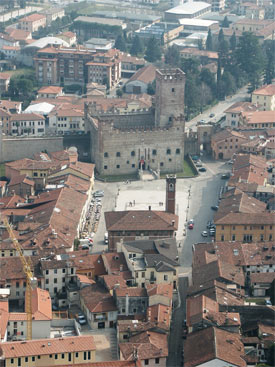 The square is enclosed by the Lower Castle, the Palace of the Doglione and long arcades and it forms a striking stage for the famous live Chess Game, held in the second week of September every two years (even years) with real, living people as the chess pieces. The Piazza Castello, originally a soil patch with a "square of stones" in the Venetian time (1404-1797), is now a large and slightly raised stone construction with the chessboard in the centre and the Della Scala’s marble coat of arms in its south side. The heart of the town’s social and economic life, regularly enlivened by the Tuesday market, still show traces that refer to the Venetian Domination (1404-1797). The column with the Lion of St. Mark remembers Marostica’s loyalty to Venice during the League of Cambrai War (1508-1510) and the flagpole sits on a column that once held the Republic of Venice’s mark and which now bears the Italian flag. The Lion of St. Mark is also sculpted in low relief on the Lower Castle’s north facade and on the Palazzo del Doglione’s south facade, overlooking the square. The Fifteenth Century fountain, formerly located in the northern part of the Square, has been demolished: today a well for water made of white stone stands in its place.
3. Palace of the Doglione
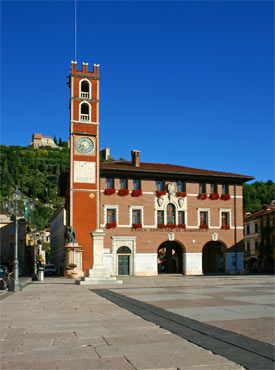 Appelé à l'époque vénitienneThe Palazzo della Loggia or Doglione was known in the Venetian period as the Chancery or Rocca di Mezzo (the Middle Tower) and today’s building is the result of reconstruction work carried out in the years 1928-1930, following the original structure’s demolition. It is rectangular in shape with a crenulated bell tower, enhanced by a finely worked sundial. Under the Venetian government (1404-1797) it housed offices and institutions of great importance for the life of the community: the municipal and ‘Notarial Chancery’ (the Notaries Association archives - in the Venetian period there were as many as 159 solicitors in Marostica); the Armoury and, since 1676, the pawnshop “Monte di Pietà. In the second half of the Nineteenth Century the Doglione became the seat of the Agrarian Assembly, the Civic Firemen and, since January 1893, offices of the local bank “Banca Popolare di Marostica” which was established on the 2nd October 1892. Today the two floors above the portico with large round arches house the head offices of Banca Popolare di Marostica. In the large meeting-room, on the first floor of the Doglione, it is possible to admire Il Buon Governo, a large work in "majolica" (tin glazed) panels by the artist Gigi Carron of Marostica..
4. St Anthony the Abbot's Church
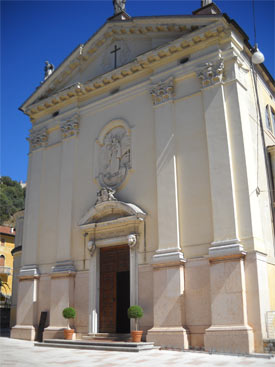 Dating from the period of the Della Scala family (1311-1387), this church has been mentioned in many documents since 1383. It was built on a site where a hospice for pilgrim’s probably stood and was originally a small structure. Since 1440 historical documents suggest that a small Franciscan friary was adjacent to the church and that friars remained there until 1656, when the monastery closed due to lack of funds. In the Seventeenth Century the Scapular Confraternity of Carmel took over the church and the friary. The church was restructured and enlarged in 1730-1740 (as indicated by the inscription on the facade) and was a branch of the Holy Mary Church, until it became St. Mary’s parish church in 1930. Its bell tower is square with double arched windows on all sides, and completed with a conical spire of considerable architectural interest.
5. St Anthony the Abbot's Church(interior)
This single naïve vault holds Marostica’s artistic masterpiece: St. Paul before the Areopagus (1574, oil on canvas) by Jacopo Dal Ponte (1510 - 1592) and his son Francesco. The different altars, dated from the 17th and 18th Centuries, are decorated with beautiful raredos (decorative screens), which were created through the technique of “scagliola” - the imitation of marble or other stone, made of plaster mixed with glue and dyes which is then painted or polished. The high altar’s screen is dedicated to St Anthony the Abbot. The scagliola technique was used in many Churches in the County of Vicenza, and bear witness to the very skilful artisans who created them. The ceilings have been decorated with three fresco painting by Giuseppe Graziani (1699- after 1760): St. Anthony the Abbot in Glory. The friar Felice Cignaroli (1727-1796) painted the altar piece the Deposition of Christ with Saints in 1768. The presence of Francescan Friars are shown in the altarpiece Holy Trinity and Saints , by Luca Martinelli in 1617 and shows three saints, St. Louis of Toulouse, St. Bonaventura and St. Francis and Pope Puis V.
6. St Anthony the Abbot's Church (Cloister)
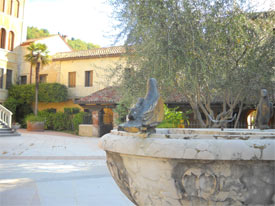 This is the most original part of the old monastery remaining intact. It is a rectangular open space surrounded by two open galleries facing a small internal garden, a small orchard and a few simple rooms showing the Franciscan frugal life. Several sculptures are displayed in the galleries: St. Sebastian and St. Rocchus, 15th century, Bernardino of Siena and St. Joseph, St. Peter and St. Paul,
 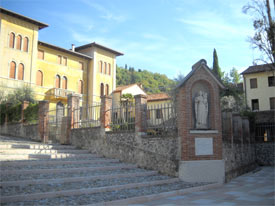 which were formerly housed in the presbytery of the church. Of particular importance is the gravestone showing the name of Cornelio Bianchi, a well known doctor from Venice, and his wife Elisabetta. In fact, it comes from the small St Benedict’s Church (now no longer existing) made to built by Cornelio Bianchi, around the Mid-Sixteenth Century, on the St Benedict hills located between Marostica and Bassano del Grappa.
7. The Blessed Sacrament's Chapel "Scoletta"
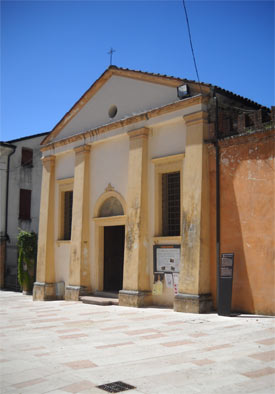 It was built by the Confraternity of the Blessed Sacrament in the 1486. It is a typical oratory, a plain building with single naive, now used for Art Exhibitions. In 1535, Jacopo Dal Ponte, (c. 1510 – 1592) painted the fresco Miracle of the Donkey of St Anthony of Padua n the facade. Today only a small part can be seen; the Christ between two angels remains on the lunette above the entrance portal. On the high alter, the Virgin Mary with St. John the Baptist and St. Anthony the Abbot was originally painted on a wooden panel by Bartolomeo Montagna - this has now been replaced by a beautiful wooden statue of the Holy Mary.
8. The stairway "Scalinata Carmini"
The stairway "Scalinata Carmini" leads to the 'Our Lady of Mount Carmel' Church and is Marostica's equivalent of the Trinità dei Monti, the most famous stairway in Rome. Being completed in the seventeenth century, it is the result of three centuries work undertaken to connect the three churches within the town centre: St. Anthony the Abbot (1383), the Blessed Sacrament's Chapel "Scoletta" (1486) and the Our Lady of Mount Carmel (1619). It was also built to create an impressive and dramatic effect for those entering through the Gate Vicenza. The three churches are in very close proximity to one another and they are often described poetically as a group of people gathered together in dialogue... The stairway "was created by people of religious faith in order to create a place of peace and beauty, the ambience of which would permeate throughout the surrounding fruit orchards enclosed within the walls of the quiet Bordalocco and Rialto streets" - Mario Consolaro - Mayor of Marostica 1971-1975.
9. Our Lady of Mount Carmel's Church
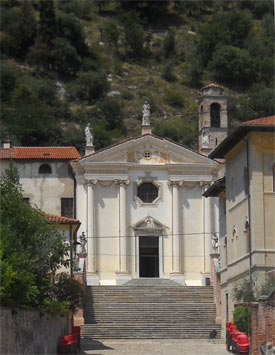 Encouraged by father Giuseppe Da Faenza who came to preach in Marostica in 1617, the community of Marostica agreed to the church being built between August 1618 and August 1619. Its construction was made possible thanks mainly to the donations of the population of Marostica. The church is located in the area so called "Le strade alte" (the high streets) due to its high position with respect to the Square which constitutes the heart of the town. It has a baroque style, with single nave; the ceiling frescoes are by Giuseppe Graziani (1699-after 1760). The two later altars’ raredos (decorative screens) are remarkably precious. They were carved in wood and decorated with the “scagliola” technique - the imitation of marble or other stone, made of plaster mixed with glue and dyes which is then painted or polished - in the second half of the 16th century. The bell tower has a square plan with a bell-chamber with four arched windows at the sides topped with an octagonal roof.
10. The Pauso Hill
It is a hill of great archaeological interest, where many different objects from the Roman Age have been discovered, including a votive bronze disc dated between the 1st century BC and the 1st century AD, providing evidence that it was probably a site of worship. Because of its location, the Pauso has always been linked with the seasonal movement of livestock between the plains of the valley to the summer mountain pastures of the Altopiano dei Sette Comunum (Tableland of the Seven Boroughs). By the 10th century there was already a simple defensive structure on top of the hill, a small fortress whose size was enlarged in the following two centuries to become a strong and massive fortified structure. A document dated from 1262 confirms that there was a proper a fortified castle with a donjon (keep) and a tower, surrounded by a wall with another tower built outside the walls. According to the same document, another two towers overlooked the hills of Marostica: one on the Mount Pausolino (where Castello Superiore now stands) and the second on Mount Agù. In other words, the Pauso contained the first Castle of Marostica, before the birth of the walled town built by the Della Scala, and played a considerable strategic and political role during the wars between Vicenza and the Ezzelini (from the end of the 12th Century until the death of Ezzelino III da Romano, which occurred in 1259). The fortified structure on the Pauso protected the village’s inhabitants and the Holy Mary Parish Church, the oldest church of Marostica. The Scaligeri occupation of Marostica in 1311 caused the first war between Padua and Verona (1312-1341), a war which devastated the the village of Marostica, however the castle on the Pauso resisted the attacks of the Paduans and remained intact. Although the castle no longer exists, a cross has been placed on the site since the end of the Seventeenth century.
11. The path "Sentiero dei Carmini"
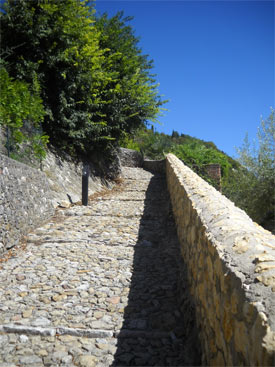 It climbs through trees and bushes up the green Pausolino Hill, from the side of the Our Lady of Mount Carmel’s Church, and leads to the Upper Castle. The restoration, stone by stone, of this path was carried out by the “Compagnia delle Mura di Marostica” (The Marostica Wall Town Company) and took several years of hard work to complete. The Company was created in 1978 and it officially became a recognised association on the 14th of January 1983. Its continuing work involves the restoration, repair, cleaning and safeguarding of the town walls and castles as well as providing other important civic services for the town. The Sentiero Dei Carmini was opened to the public on the 28th of May 1989.
12. Upper Castle "Castello Superiore"
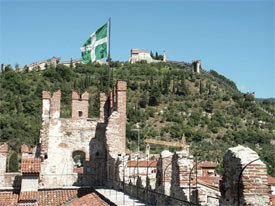 It was built on the top of the Pausolino hill and it overlooks the walled town and the Lower Castle (Castello Inferiore). It was built upon a previous tower (or donjon), which was mentioned in Thirteenth-century documents, and it dates from the time of the Lord of Cangrande della Scala II (1352-1359), the great builder of the so called “Scaligeri” defensive works. This construction was originally a massive structure, with four corner towers and a keep which is now mostly in ruins. The stone “Ladder”, the coat of arms set in the front of the castle gate’s lunette, is another reminder of the Della Scala dominion of the 14th century. Work in 1934-36 restored the Castle’s battlement tower above the entrance lunette.
13. Arpalice Cuman Pertile (1876 – 1958)
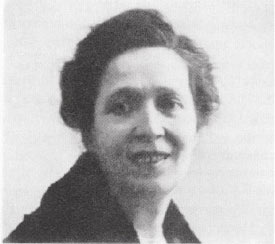 The creative writer and poetess Arpalice Cuman Pertile graduated in 1898 from the Faculty of Italian Literature in Florence - the first woman from Marostica to obtain a degree. She taught in Turin and Vicenza. In 1904 she married Cristiano Pertile, a teacher of Italian Literature at the Liceo Pigafetta in Vicenza, who introduced her to the city’s cultural life which, at that time included important figures such as Giacomo Zanella, Antonio Fogazzaro, Paolo Lioy and Fedele Lampertico. She was a respected lecturer, celebrated in schools and adult education institutes, and a writer of children’s literature. Remaining true to her ethical principles, at the outbreak of the First World War she and her husband sided with the pacifists, which resulted in their exile, firstly to Novara and then to Genoa. They were only able to return home and resume teaching in 1919. However, with Mussolini’s Public Administration reforms she lost her teaching post, and in 1929 all her books were withdrawn from the schools after the introduction of State textbooks. Unpopular with the Fascist Regime, she devoted herself to writing and private teaching. The Municipality of Marostica dedicates two events to Arpalice Cuman Pertile: the Arpalice Cuman Pertile National Prize (annual) - Stories, Poetry, Plays for children – created in 1987, and Poesia In Canto National Prize (biennial): the winning poems are set to music to be sung by Youth Choirs.
14. St Mark's Church
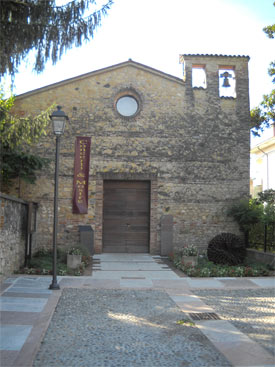 The citizens of Marostica suggested it be built in 1450, to replace a building containing a “mangonel” (a war machine able to throw stones and incendiary material during sieges). This small church is a memorial to their loyalty to the Republic of Venice, and was dedicated to St Mark. The facade is linear and has a small bell tower with two niches. The interior is made by a single nave and a square plan apse with a cross-vault. It was originally decorated with three altars and a painting with the Circumcision of Our Lord (now lost). The painting was attributed to Jacopo Dal Ponte (also known as ‘Bassano’ c. 1510 – 1592) by the art historian, G. B. Verci. During the Venetian period (1404-1797), a feast for the patron St. Mark who was also patron of the notaries, was organized on the 25th of April each year. A solemn procession of the notaries, the citizens, the clergy and the Governor of Marostica (‘Podestà’) was held which ended with the Holy Mass in the Holy Mary Parish Church. St Mark Church ceased being a place of worship and fell into ruin from the 19th century. In more recent times it was used as the civic firemen’s warehouse before finally being restored between 1988 and 1995. It is now used as a council hall for concerts, conferences and Art Exhibitions.
15. Walls and gates
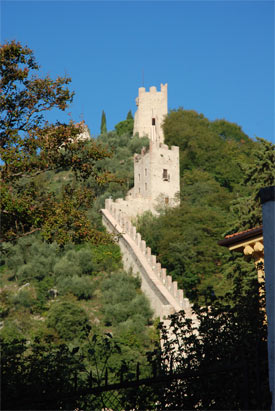 The town curtain wall’s construction (approximately 1700 -1800 metres in length), surrounding the Pausolino hill, began on the 1st of March 1372 during the time of Cansignorio della Scala (1359-1375). According to the Venetian historian Marin Sanudo (1466 - 1536), the wall took three years to build and was completed in 1375. The wall is crenulated and has “chemins de ronde” (walkways) around the entire internal walls. Three sturdy gates Vicentina (south), Bassanese (east) and Breganzina (west) together with 24 bastions projecting outward from the curtain wall protected the town from attackers. A moat and the drawbridges in the Lower Castle further strengthened the defensive structures. When the local train station was built at the beginning of 20th Century (outside the south-east wall near the Lower Castle) another gate, Porta Stazione, was opened to allow easier access to the town centre.
16. Bernardino Frescura
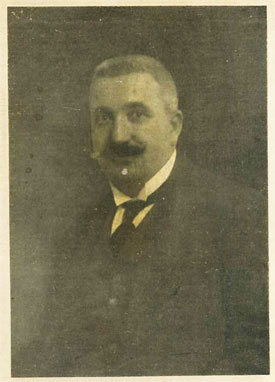 He graduated from Padua University and from 1895 taught geography at the Royal Technical College of Genoa and Economic Geography at the School of Commerce. In 1901 he qualified for university teaching at the Royal University of Genoa, and soon after he began to teach Geography at the Bocconi University in Milan. His specialist studies included the ‘Altopiano di Asiago e dei Sette Comuni’ (Plateau of Asiago and the Seven Towns), the Brenta River and the cultural traditions of the county of Vicenza. As an economic geographer he focused his attention on the problems of Italy’s borders after the First World War and to Italian emigration to South America, writing numerous guide books for the most popular destinations. At the end of the First World War, as an expert on Italy’s eastern borders, he was called on to accompany the Italian delegation, led by Prime Minister Vittorio Emanuele Orlando and Foreign Minister Sidney Sonnino, to the Peace Conference in Paris on the 18th of January 1919. His primary responsibility was to illustrate Italy’s rights to those lands which were promised in the Treaty of London of 26th April 1915. He followed this work by writing the book The borders of the new Italy and the Adriatic problem.
17. S. Roch's Church and monastery
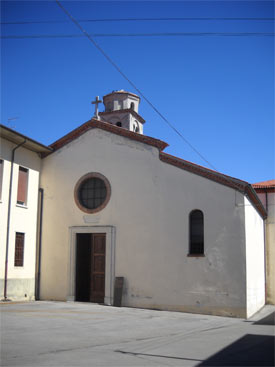 Since 1410 there has been a chapel dedicated to St. Roch located in the Borough Panica and was built and run by the ‘Confraternity of St Roch’, a local religious association. The monastery with two very interesting cloisters was built by the Dominicans who arrived at the beginning of the Sixteenth Century.
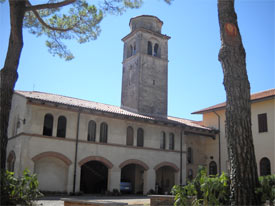 They also built the bell tower and converted the chapel into a church complete with a nave and two aisles. Successive restructuring works moved the bell tower onto the church’s roof. The church has seven altars, decorated in Baroque Style. Their raredos (decorative screens) are valuable artistic works created in the “scagliola” technique - the imitation of marble or other stone, made of plaster mixed with glue and dyes which is then painted or polished - by Natale Bianchini (1653-1729), and by Antonio Bianchi (17th century) who made the St. Dominic and the Guardian Angel’s altar (or the death of St. Joseph). In 1770 the Venetian Government suppressed the monasteries and the Dominicans left Marostica. On the 11th of May 1771 the hospital of Marostica was moved from Borgo Giara (outside the Wall around the Holy Mary’s Church) to the rooms of the monastery.
18. Campo Marzio
A large triangular green area with trees, situated to the north-east of the Gate (Porta) Bassano. During the Venetian period it became the place for military exercises and reviews of the cernide, the local territorial militia of the Venetian Republic. Historical sources refer to a kind of Palio, a target-shooting competition, which attracted many people. It is still the stopping place and place of departure for the transhumance (seasonal movement of livestock between the plains of the valley to the summer mountain pastures) to and from the mountains in the “Tableland of the Seven Boroughs” (Altonopiano dei Sette Comuni). It also hosts an important cattle fair during the St. Simon Fair the last Sunday in October.
19. Prospero Alpini (1553 – 1616)
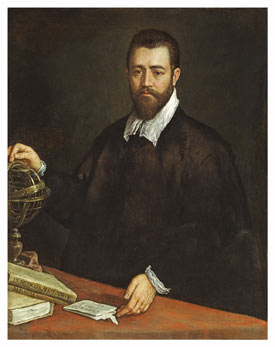 Prospero Alpini was extremely fond of Marostica and was proud to boast the name “marosticensis”. He graduated at the Faculty of Philosophers and Physicians at the University of Padua in 1578, and practiced as doctor in the Camposampiero in Bassano del Grappa. Prospero Alpini became professor of Medicine in the same University and wrote essays on medicine and botany. In 1604 he was appointed Prefect of the University of Padua’s Botanical Garden, where he played an important role in the spreading and cultivation of many exotic species. His name is still remembered for the genus Alpinia Prospero Alpini is internationally renowned not only for his studies, which are important for the history of medicine and botany, but also for having contributed to making known to the Republic of Venice, and therefore Europe, a special beverage that still enlivens our breaks: coffee! Between 1580 and 1584 he went with the Venetian Consul, Giorgio Emo, to Egypt and Crete where Alpini was able to classify their botanical species and studied Egyptian medicine. A young portrait of him, painted by Leandro Dal Ponte in the 1584, is now at Staatsgalerie of Stuttgart (Germany).
20. The Assumption of Mary's Parish Church
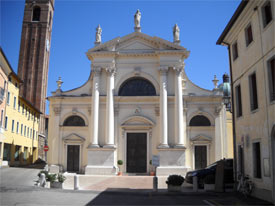 It is the oldest evidence of Marostica Christian faith and was probably built in the 8th Century as a rural church. It was the first church in the first settlement in Marostica (the Borough Giara) at the foot of the Pauso Hill, an area inhabited since the pre-Roman times. In the Thirteenth century it became a Parish Church upon which numerous “daughter” churches, across the region, depended. It was enlarged around 1450 and at the end of the Seventeenth Century another important restoration and extension was made thanks to the enterprising Don Gaspare Ghirardelli (an inscription inside indicates the exact place where the old church ended and the new part started). It was consecrated in 1701. Due to those innovative works, the church acquired its present-day structure with a baroque facade. The three portals are a great example of bronze fusion, created between 1979 -1985 by the local artist Gigi Carron (1926-2006). They illustrate episodes from the Bible and the life of Christ, The bell tower, erected in 1711, was embellished by a fine sundial and a clock in 1727 by the well known clockmaker Bartolomeo Ferracina.
21. The Assumption of Mary's Parish Church (Interior)
Its three naves date the reconstruction work to the end of the Seventeenth Century. There are eight altars. The high altar in baroque style, created by the school of Orazio Marinali (17th century), was embellished with a painting by Alessandro Maganza (according to the Art historician G. B. Verci), now replaced by a copy of Titian’s The Assumption of Mary by Giuseppe Fortunato Centazzo (19th century). An interesting painting, the Sacrifice of Melchisedech by Andrea Celesti (1637- c. 1711) sits in the apse. The raredos (decorative screens) by the altars of Our Lady of Sorrows and Our Lady of Lourdes are two precious artistic example of the “scagliola” technique - the imitation of marble or other stone, made of plaster mixed with glue and dyes which is then painted or polished. The frescoes in the three sections of the ceiling are by Bartolomeo Dusi (1833-1904), who also made the Transfiguration in the apse’s vault, whereas the Christ in the Garden was painted by Pietro Menegatti (1809-1848) and The Baptism of Christ was painted by Friar Felice Cignaroli. The church also preserves a beautiful marble relief with Madonna and Child by the school of Jacopo Sansovino (1486 - 1470), a votive offering donated by Prospero Alpini (1553-1616) for his safe returning from Egypt. It is placed in the left nave on the north; originally it was outside beside the small north entrance.
22. S. Gotthard's Church and Convent
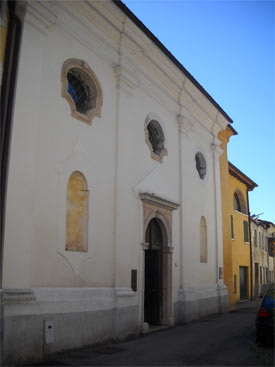 The convent dates from 1470, and it was run by the Augustinian nuns until the Order was suppressed in 1810 during the Napoleonic period. All that remains of the convent are a few ruins consisting of a small portion of the building (now a private residence) and the adjacent small church (now an office).
23. St Fabian and Sebastian's Monastery
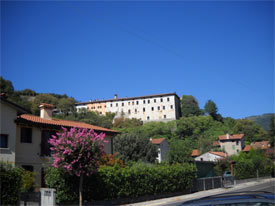 The monastery, now in ruins, is located on “Bocca di Valle”, overlooking the eastern slopes of the Pauso Hill. This religious site dates from 1259, and there is evidence that it was founded by the Benedictine monks. Around the 1483-1486 it was entrusted to the Franciscans who dedicated the church in 1494 and over the centuries both the monastery and the church have been enlarged. In 1640-1645 they built the cloister with two open cross vaulted galleries, surmounted by a loggia (gallery); the church was enlarged with two extensions on the east and west sides and the bell tower was raised. During the Seventeenth century the church, which has two naves, was enlarged with a new chapel acquiring as many as eight altars. Due to Napoleon suppression of religious orders (1798), the Franciscan friars had to leave the monastery and the church in 1810 and it began to deteriorate year by year. The tower bell was struck by lightning and collapsed in 1936, and the paintings by Jacopo Dal Ponte (1510 – 1592) and by Father Felice Cignaroli have been lost. Nowadays there are just a few signs of that memorable religious place; part of the apse and some fragments of frescoes on the open galleries’ ceiling, showing episodes from the Bible and from St. Francis’s life.
24. Cinema Teatro Politeama
25. Opificio
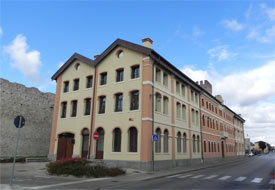 The Opificio, built in 1910 for the firm Pietro Chiurato, was one of thirty straw hat factories in Marostica. Recognised by the National Ministry of Culture as an Industrial Heritage Site, it is now the last reminder of a proud and important period in the history of Marostica.
Straw plaiting for hat making was the most widespread cottage industry in 19th century “Alto Vicentino”, an area which includes the towns of Breganze, Marostica, Lusiana and Conco. At the end of the century the straw plait was in great demand to make hats, and very large numbers of people from the area were employed throughout the production process. The 1895 census includes some 15,000 workers associated with the industry: from the harvesting of local Leghorn straw (known locally as ‘fastughi’) to the sorting of the straw into sizes, then the splitting, plaiting, dyeing and sewing of the straw ready for hat manufacture - this included many women and children from poor families who plaited the straw. The finished plait was sold to buyers every week at the Tuesday market in Marostica or to agents who visited the workers in their homes. The straw plait was then sewn into hats within the 30 factories situated inside the walled town of Marostica and also at a number of factory sites within the boroughs of Panica (to the west), Giara (to the east), and Vallonara towards Asiago in the north. Over the years, hat making became synonymous with the town of Marostica, with over one million hats being exported every year to countries across Europe and to the United States. Unfortunately, by 1940 most of the factories had closed due to a variety of economic pressures including the impact of the First World War, the 1929 economic crisis, tough Chinese and Japanese competition, and also through changes in fashion. Hats were, however, still produced in the town until the 1970’s, but on a much smaller scale.


 Informazioni e prenotazion / Information and booking
Tel: + 39 0424 72127
info@marosticascacchi.it